NADYA TOLOKONNIKOVA
Interview by Leah Wasilewski
Photos by Genevieve Andrews
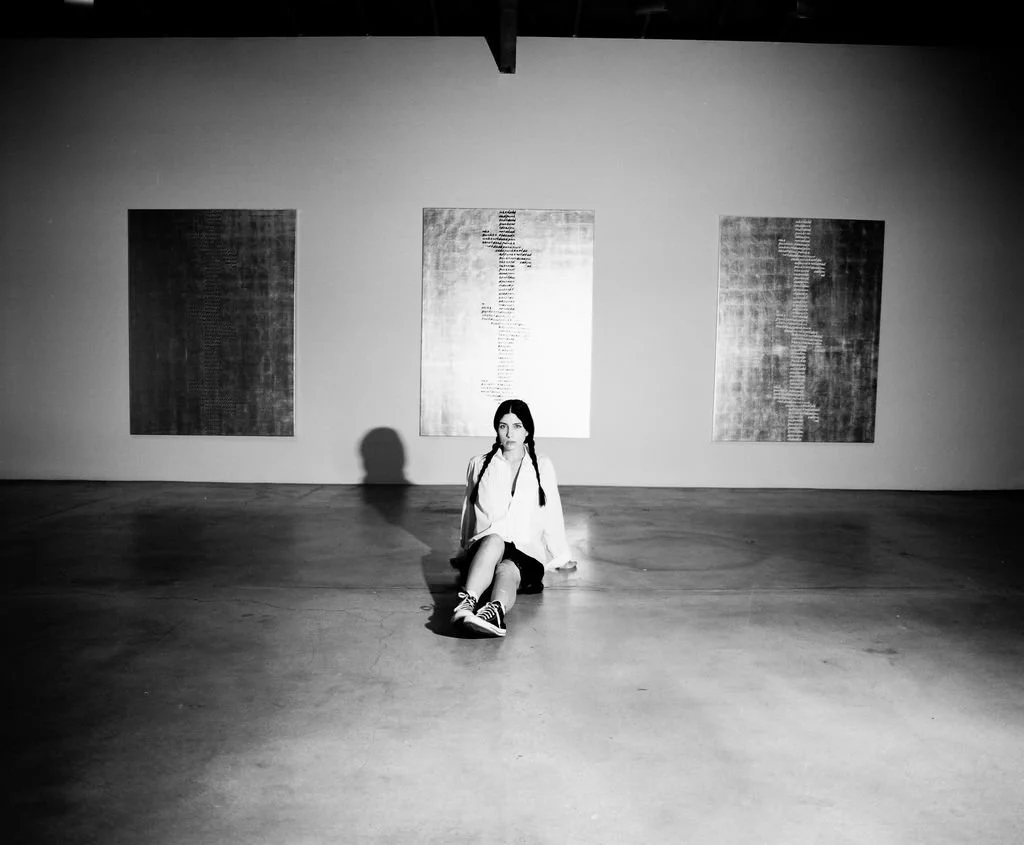
How was this exhibit at Honor Fraser different from your other work?
This exhibit was the most personal I’ve done in years. It was shaped by my lived experience — my grief, rage, and refusal to disappear. Unlike earlier works that often used direct confrontation, here I let silence and vulnerability speak just as loudly.
When it comes to activism, what artistic medium would you say your voice really flourishes in, in its most authentic and powerful way?
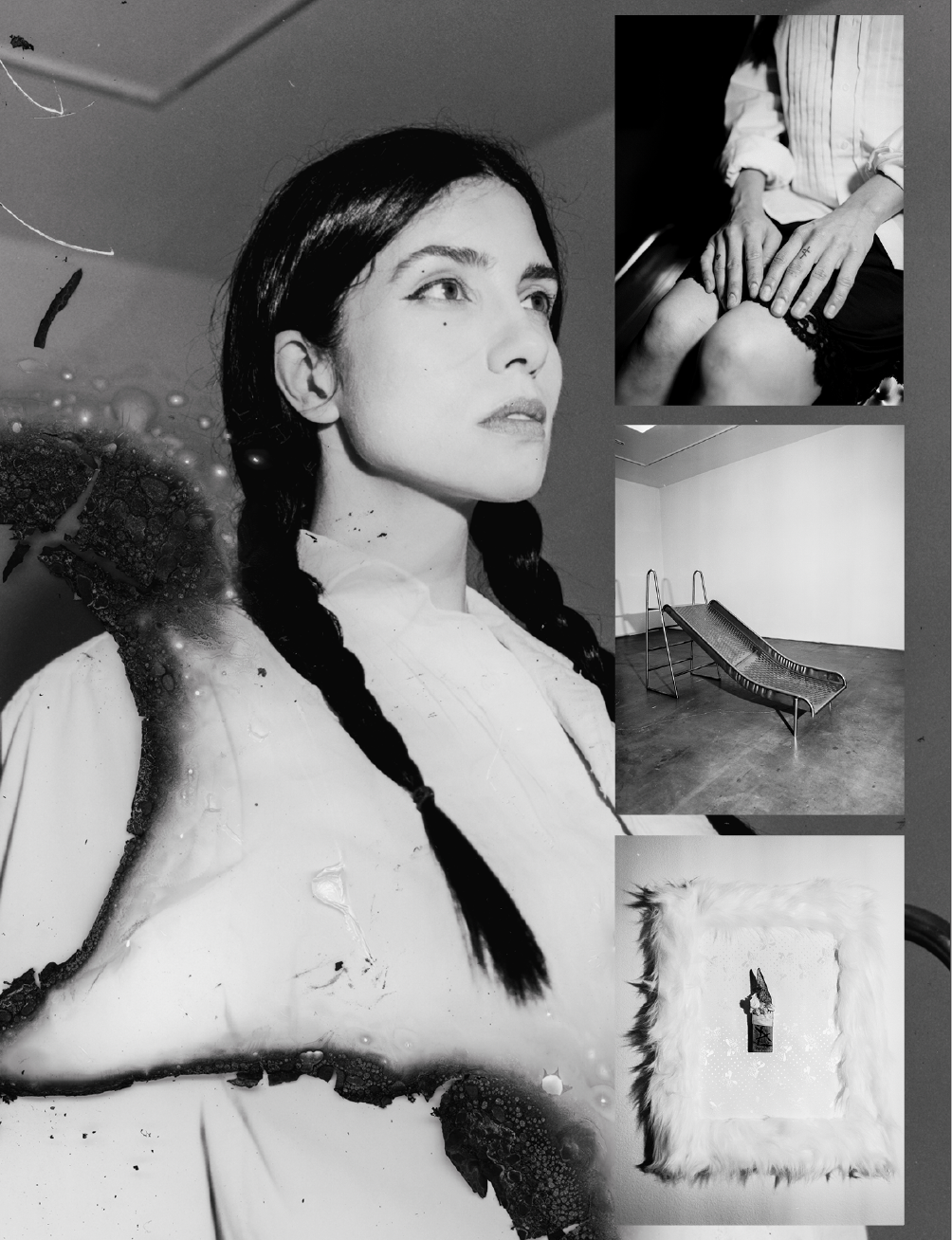
Performance is still where I feel most unfiltered. There’s something raw and ungovernable about using my body as a site of protest. But, speaking generally, I flourish in the cracks between mediums.
How is the current political state of the world fueling the urgency of your work?
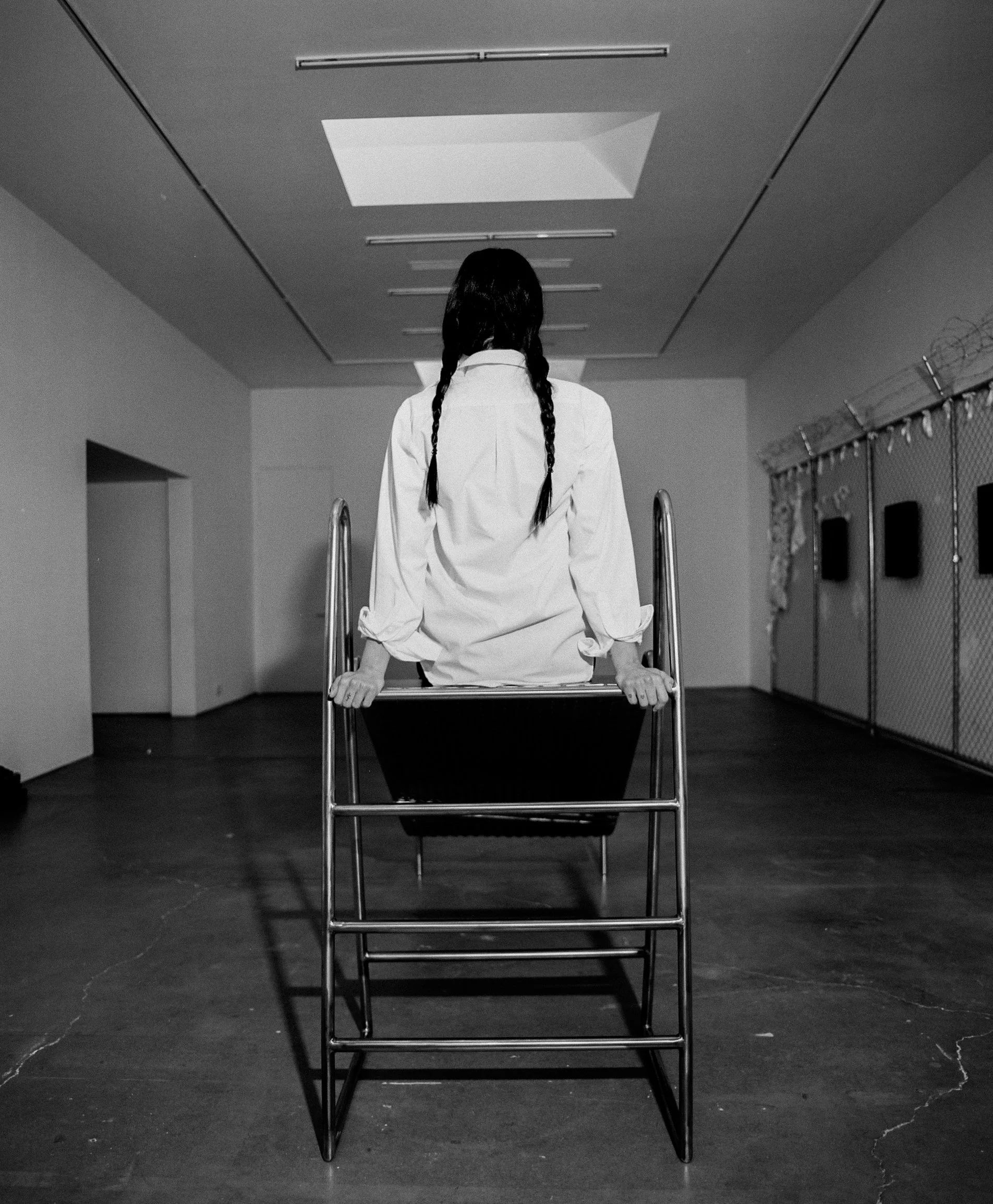
We’re living in accelerating collapse. Climate breakdown, authoritarianism – it’s not theoretical anymore, it’s embodied. The structures that are supposed to protect are turning predatory.
Where do you see your art going next?
Ideally, I’d be making works that don’t just describe oppression but interrupt it.
What is urgent to you, to the world, to your art, to Nadya Tolokonnikova as a person?
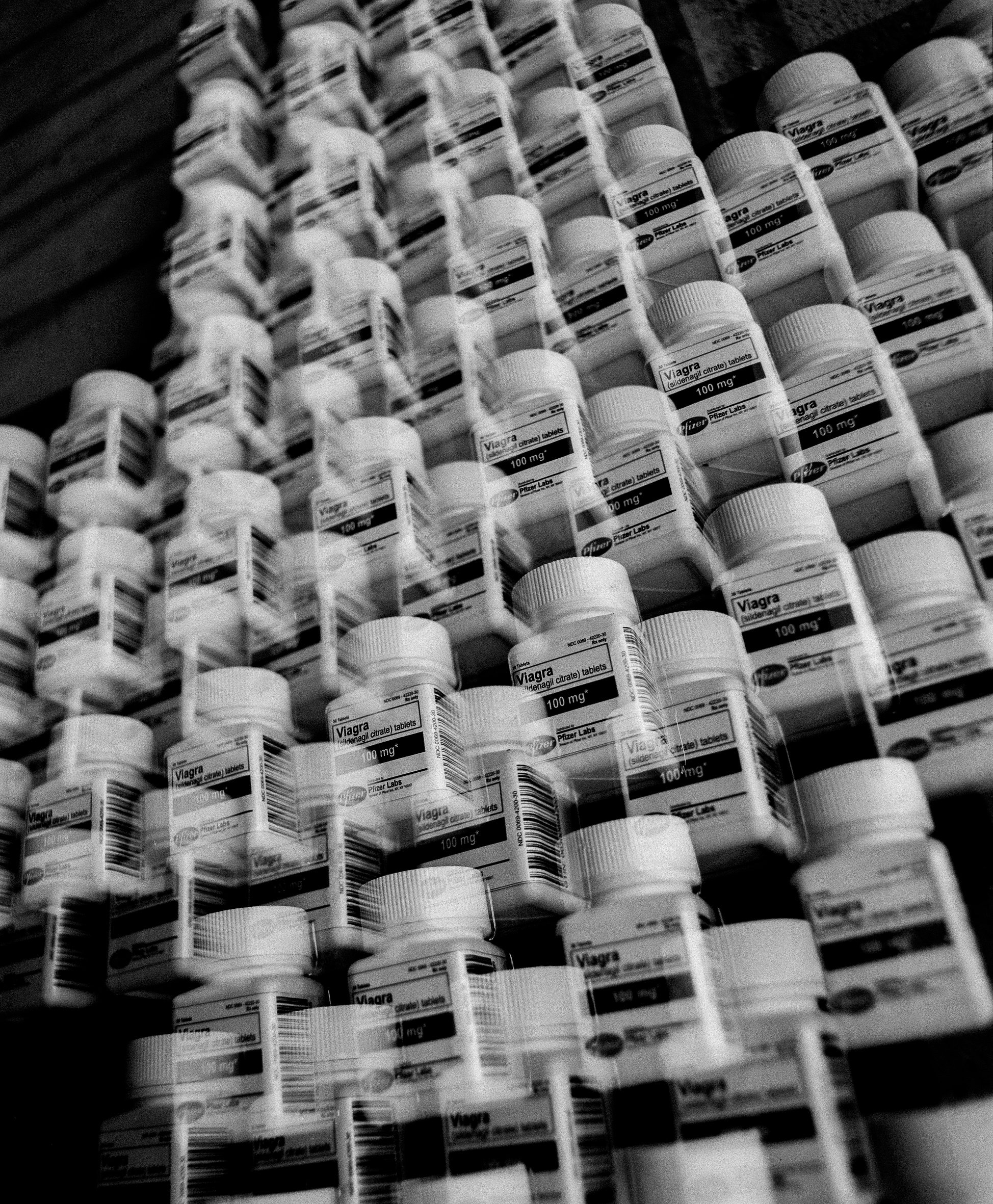
Unlearning obedience is urgent. We’ve been trained to normalize horror, to shrink ourselves, to cope instead of revolt.
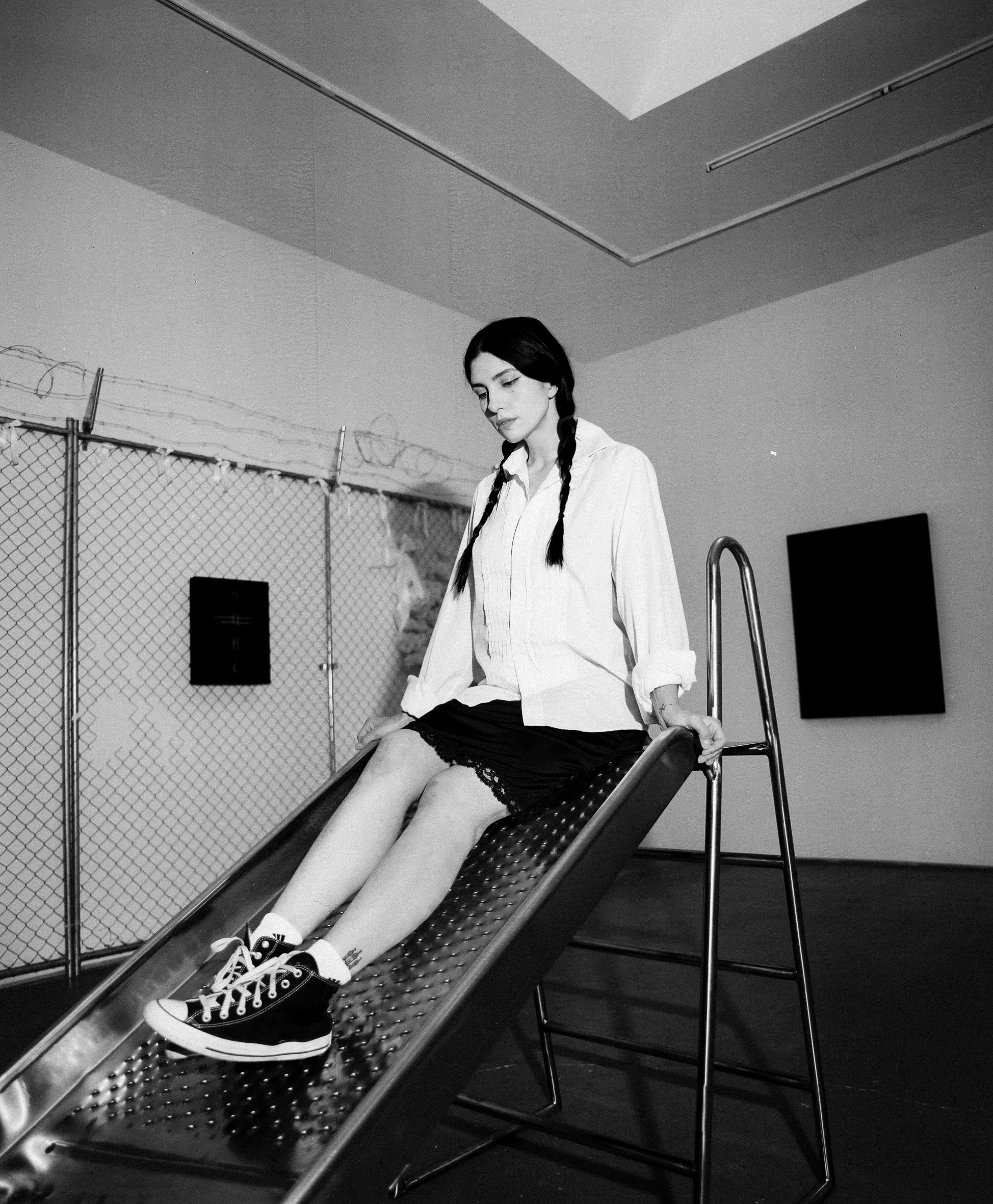
Do you thread your art, the state of the world, and you as an individual, as three components that are intrinsically linked to one another?
Yes — not as separate entities, but as different manifestations of the same condition. The personal is not just political; it’s structural. My body remembers the carceral logic of the state. My nervous system has been trained by borders and barricades. So my art becomes a method of counter-mapping – of locating where those forces live inside me, and then refusing them.
The world presses itself into the artist whether we ask for it or not. The question is whether we let it flatten us — or whether we alchemize it into something louder, stranger, more dangerous.